Visualizzazione post con etichetta chaji. Mostra tutti i post

sabato 29 ottobre 2016

Haigata senza carbone!

Per haigata si intende la sistemazione della cenere (cenere specifica per l'uso in cerimonia del tè) all'interno del braciere, sia estivo che invernale.
La cenere è molto importante perché fa da base ai soprastanti carboni ed ha anche un bell'effetto estetico.
Mettere la cenere è un'arte complessa in cerimonia del tè poiché ogni tipo di braciere ha una diversa forma di cenere.
La cenere viene prima imbastita e poi, una volta data sommariamente la forma, viene "lisciata" con appositi utensili.
Tuttavia facendo lezione, per risparmiare, si usano i finti carboni che hanno l'aspetto di veri carboni e si "accendono" proprio come dei carboni roventi, ma sono fatti di materiali sintetici ed emettono luce e calore grazie all'energia elettrica.
Di solito con i carboni elettrici non si può usare la cenere e questo è un vero peccato perché si perde molto dell' estetica del braciere.
Ho recentemente scoperto, però, un sistema per poter usare la cenere con i carboni sintetici potendo fare anche un "parziale" haigata.


Esistono delle "piastre di finti carboni", elettriche, che si possono inserire all'interno di un disco protettivo consentendo di mettere nei bordi la cenere e poterla sistemare lisciandola adeguatamente (senza, purtroppo, poter ottenere tutte le forme tradizionali richieste dai vari tipi di bracieri).
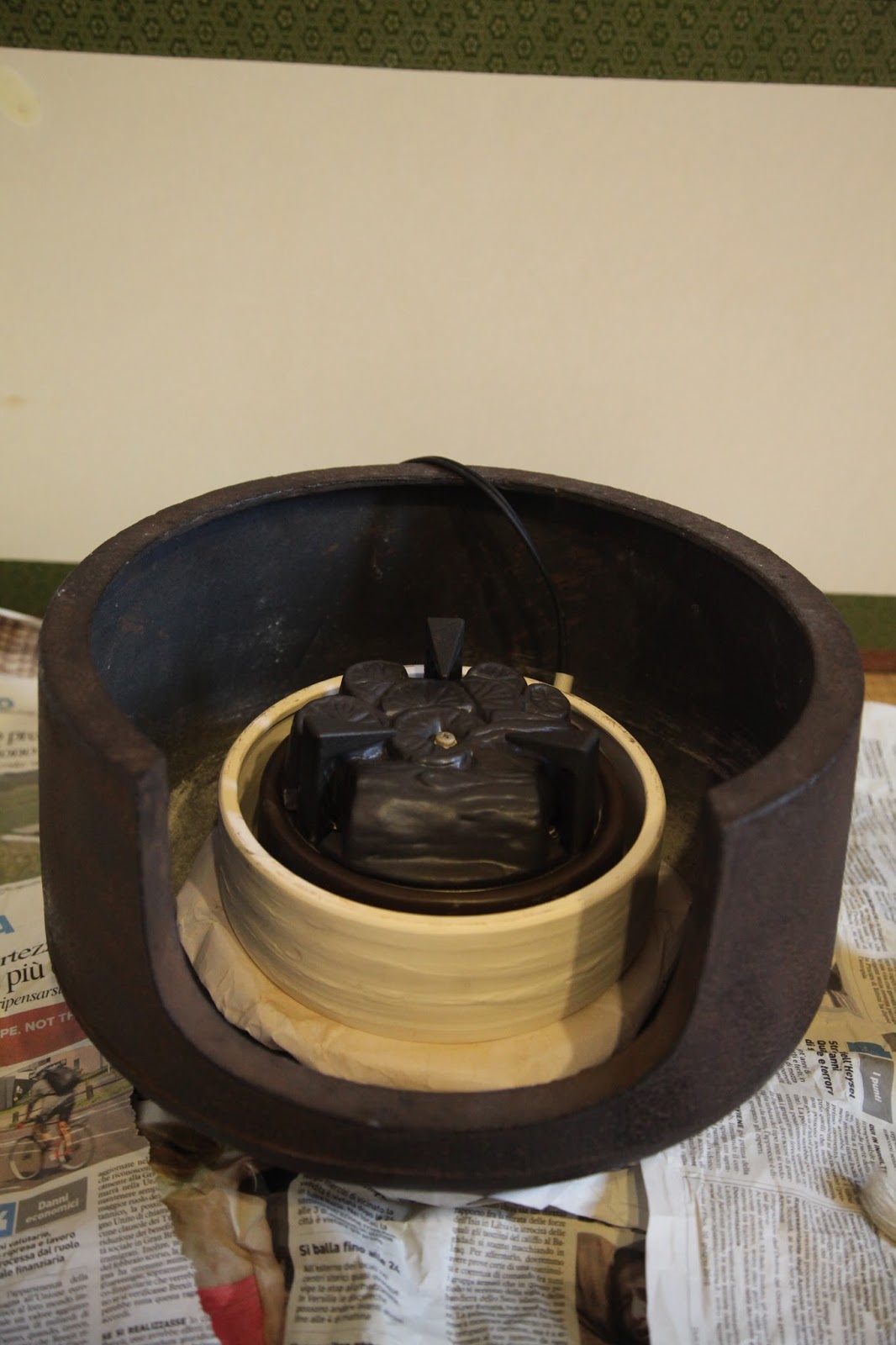


Non possiedo ancora un maekegawara (la mezza luna di ceramica che si inserisce nella cenere di fronte alle braci) adatto al furo in ghisa (dovrebbe essere di colore arancione) quindi mi sono dovuta adattare con il mio bianco. 
Ecco in queste foto qualche esempio di quello che è stato il risultato finale che mi ha molto soddisfatta.


mercoledì 21 marzo 2012

The Beauty - (chanoyu of middle March)


The last lesson of Chanoyu had a theme (effettively the same theme used for the lessons of gong fu cha) very challenging: the beauty.
The shikishi used in the previous week was based on the purity of the heart and the argument that
we had treated was the renewal that spring inevitably brings with.
With this lesson I wanted to introduce the theme of Beauty as a whole between inner and
exterior: there is no exterior beauty if also there isn't an inner beauty and does not exist
a nice container for the tea without ... someone who knows how to handle and use it with care!
The correlation between nature, pure soul, beauty tools and technique of use is very narrow:
there isn't a well done tea ceremony without these four elements.
What good is having a rare cup made by a great Master if you do not have the perfect technique
to use it? And what good is a perfect technique if you do not use a good tea, freshly and ground
with care? And finally, what good is having a wonderful tea if we are not able to transfer
our love in the infusion that we are preparing?

lunedì 30 agosto 2010

My first chaji (english version)

My teacher, just like me, has birthday in July and this time I decided, instead of the usual birthday gift, of calling her for a chaji.
It was a great experience because I had never invited anyone before for a chaji organized entirely by me.
A chaji is a full tea ceremony: includes sumi (charcoal) ceremony, kaiseki meal, two desserts and two-course of tea.
To make life easier I decided to make a chaji "simplified" by eliminating the kaiseki meal and adopting the formula of Zen-cha, reversing the order of usucha and Koicha so that the charcoal had time to heat the water for good afford to make a good thick tea.
It was very tiring but it helped me to learn how to organize the management of work (I started to prepare several days before) and my teacher was very pleased with the work I have done.
(Actually I do not know why it was so happy because I have made many mistakes, but she is always so patient ...). As you can see from the photos I used a typical summer Korean-style brazier with a shiki-ita in Oribe style. I then used a mitsusashi of 1800, a Natsume usagi maki and a type of chaire akahada. The cup for koicha was a classic aka-raku while for usucha was a hira-chawan of 1800.
I wanted to give the atmosphere of an informal and relaxed chaji so I put in a tokonoma a jiku with a simple phrase that translated into Italian means something like "take a cup of tea." The choice of this phrase would mean to me: let us not be too strict and we take this opportunity to drink a simple cup of tea.